Mirle Group has officially announced the establishment of its Embodied AI Business Group, marking a strategic leap into the next generation of autonomous robotics.Embodied AI—defined by the integration ofperception, action, and decision-making—enables robots to interact with thephysical world intelligently and is the cornerstone of the next phase inindustrial automation.
This new business unit will synergize Mirle’s expertise in precision reducers, robotic joint modules, quadruped platforms, and digital twin systems. With small-scale mass production targeted for 2026, Mirle is positioned to bridge the smart manufacturing gap between Taiwan and the global markets of Europe and North America.
Mirle has been positioned in the robotics sector for many years, possessing a complete technical chain ranging from critical components to full-scale platforms.
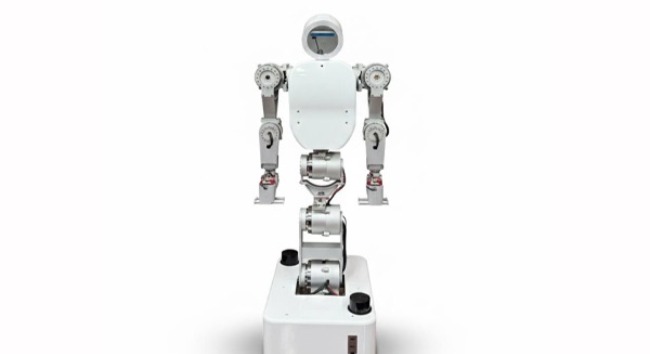
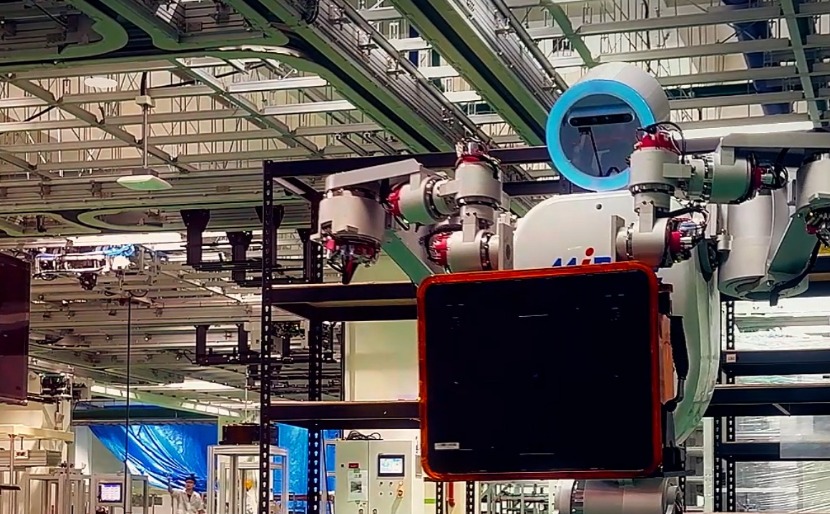
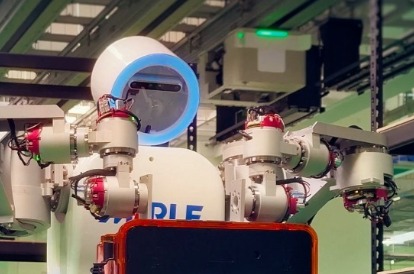
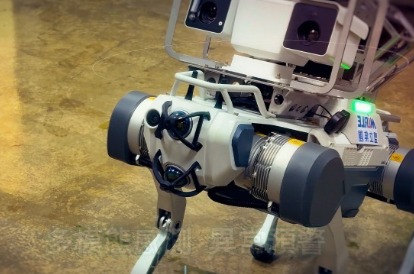
In addition to the precision harmonic reducers and joint modules produced by its affiliate, Main Drive Corp., which serve as the essential foundation for humanoid and mobile robots, the Group has successfully developed quadruped robot dogs, wheeled mobile platforms (AMR/AGV), and torso-based robots.
Based on specific site requirements, these can integrate grippers, dexterous hands, AI vision, and environmental sensors, while interfacing with MES or scheduling systems. This enables the robots to adapt to diverse application scenarios such as inspection, transport, assembly, and service.
At the heart of Mirle’s development strategy is the "Virtual Factory" model, which utilizes Digital Twin technology to accelerate the R&D and deployment of embodied agents. Within these simulated environments, robots undergo intensive training for motion planning, obstacle avoidance, and complex process tasks. Validating these behaviors in a virtual space before physical implementation significantly reduces calibration time and enhances operational stability. This digital-first approach not only streamlines the deployment of autonomous systems but also establishes a scalable framework for future mass production and bespoke client customizations.
Mirle’s vision for Embodied AI focuses on solving tangible manufacturing pain points rather than pursuing industry hype. The Group’s robotics lineup is prioritized for high-impact industrial applications, such as smart material handling, high-risk environment inspection, and AI-collaborative assembly stations. Specifically for the U.S. market, Mirle is advancing torso and humanoid platforms tailored for specialized service and research environments. As global industries face mounting labor pressures and the need for supply chain resilience, Mirle’s embodied solutions provide the critical momentum needed to enhance capacity while mitigating operational risks.
With mass production scheduled for 2026, Mirle is set to become a pivotal driver in the global Embodied AI supply chain. The initial rollout will address the urgent demand for inspection and workstation assistance in Taiwan’s semiconductor and substrate facilities, followed by a strategic expansion into the highly regulated markets of Europe and the United States. Chairman Houng Sun emphasized that the core of smart manufacturing lies in the integration of "Data × AI × Cyber-Physical Systems." By enabling AI to autonomously execute tasks in real-world environments, Mirle is evolving into an AI-driven robotics automation leader, helping global manufacturers achieve a new era of resilience and efficiency.
Mirle Establishes "Embodied AI Business Group" to Pioneer Next-Generation Smart Manufacturing with Autonomous Robotics
Mirle Group has officially announced the establishment of its Embodied AI Business Group, marking a strategic leap into the next generation of autonomous robotics.Embodied AI—defined by the integration ofperception, action, and decision-making—enables robots to interact with thephysical world intelligently and is the cornerstone of the next phase inindustrial automation.
This new business unit will synergize Mirle’s expertise in precision reducers, robotic joint modules, quadruped platforms, and digital twin systems. With small-scale mass production targeted for 2026, Mirle is positioned to bridge the smart manufacturing gap between Taiwan and the global markets of Europe and North America.
Mirle has been positioned in the robotics sector for many years, possessing a complete technical chain ranging from critical components to full-scale platforms.
In addition to the precision harmonic reducers and joint modules produced by its affiliate, Main Drive Corp., which serve as the essential foundation for humanoid and mobile robots, the Group has successfully developed quadruped robot dogs, wheeled mobile platforms (AMR/AGV), and torso-based robots.
Based on specific site requirements, these can integrate grippers, dexterous hands, AI vision, and environmental sensors, while interfacing with MES or scheduling systems. This enables the robots to adapt to diverse application scenarios such as inspection, transport, assembly, and service.
At the heart of Mirle’s development strategy is the "Virtual Factory" model, which utilizes Digital Twin technology to accelerate the R&D and deployment of embodied agents. Within these simulated environments, robots undergo intensive training for motion planning, obstacle avoidance, and complex process tasks. Validating these behaviors in a virtual space before physical implementation significantly reduces calibration time and enhances operational stability. This digital-first approach not only streamlines the deployment of autonomous systems but also establishes a scalable framework for future mass production and bespoke client customizations.
Mirle’s vision for Embodied AI focuses on solving tangible manufacturing pain points rather than pursuing industry hype. The Group’s robotics lineup is prioritized for high-impact industrial applications, such as smart material handling, high-risk environment inspection, and AI-collaborative assembly stations. Specifically for the U.S. market, Mirle is advancing torso and humanoid platforms tailored for specialized service and research environments. As global industries face mounting labor pressures and the need for supply chain resilience, Mirle’s embodied solutions provide the critical momentum needed to enhance capacity while mitigating operational risks.
With mass production scheduled for 2026, Mirle is set to become a pivotal driver in the global Embodied AI supply chain. The initial rollout will address the urgent demand for inspection and workstation assistance in Taiwan’s semiconductor and substrate facilities, followed by a strategic expansion into the highly regulated markets of Europe and the United States. Chairman Houng Sun emphasized that the core of smart manufacturing lies in the integration of "Data × AI × Cyber-Physical Systems." By enabling AI to autonomously execute tasks in real-world environments, Mirle is evolving into an AI-driven robotics automation leader, helping global manufacturers achieve a new era of resilience and efficiency.